
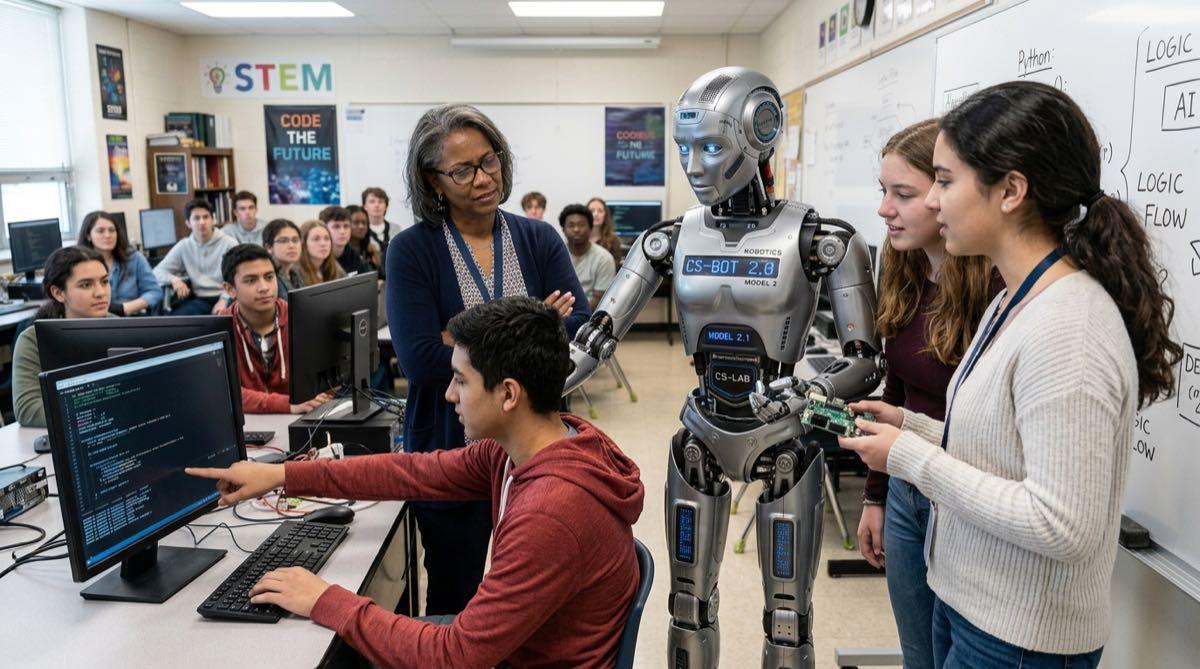
When I first started teaching in 2004, the idea of a robot teaching a class would have seemed like something out of a sci-fi movie or The Jetsons. But now it seems like anything’s possible. My perspective comes from my belief that we are human beings and we need care that can only come from humans and human interaction. I believe this is true in our formative years, midlife, and old age. Values and virtues come from people, and I believe only people can maintain them.
Cases for the Robot
Here are a few points below:
- Programmable and flexible – resilient to change
- Easy-to-generate standards make new lessons
- No emotions getting in the way
- Can work without rest
And of course, technology can enhance human experience, mostly by freeing humans to do what we really want.
Challenges with this Case
That said, there are some challenges; we humans never seem to leave well enough alone. It seems the more we iterate, the more we improve our processes. The more we work, the more likely we are to burn out. The expectations are higher! It seems to always turn into getting better faster! The AI growth we’ve seen is largely a race to become the “best” and most powerful. And education, which seems to lag behind tech, is aiming to prepare students for this type of world. I can see why the instinct would be to use technology and AI for as much as possible, but it could easily lead to burnout.
Another challenge is that schools provide way more than instruction to students, and I’m not convinced a robot could provide that “more”. Schools are a social hub for many students. It’s the place many of them eat two of their meals five days a week. It’s where they meet their friends; it’s how they learn disciplines like study skills and face their first issues of conscience about whether to lie, cheat, or do the right thing. And much of this is happening as students grow and develop. Because so many young people and their parents depend on educational institutions for what is essential care, we can’t afford to outsource the raising of a new generation to robots.
Need for the Teacher
Teachers and the larger educational body maintain this environment. One human need is purpose. People need to feel like they are here for a reason and that what they learn matters. Our economy is complex, and technology is making it more so. But I still find we need human intervention when things go off the rails. Humans need to prioritize human interaction. People need people in their lives. Yet it seems like the economy and the ability to make money are increasingly dependent on robots.
This need is exactly why Rinse and Reteach was created: to give teachers time to invest in student growth without being overwhelmed by resource constraints and the high demands on students. Technology can help assuage that sense of overwhelm, but we need people to temper the takeover and put safeguards in place against the machine. Teaching is one of the most humanistic and human-centered fields I know. We need people to notice people. Robots, unfortunately, just won’t fill the gap in a way that reinforces our humanity and basic needs
One may argue that schools should not be places for belonging and connection; whether they should or shouldn’t doesn’t matter. They are. Maslow’s Hierarchy of Needs, Tier 3, is all over the school system. Students making friends, joining activities and sports, and connecting with teachers are all part of this stage. And that’s not the end game; we really aim to have every student find their passion, choose a path, and realize their potential, which is the top tier in the pyramid. See the diagram below.

When the time comes, I hope leaders in education will be able to step up, speak up when things aren’t working, and consciously choose to emphasize the human factor despite pressure from external forces seeking power or financial gain.