
At a Glance
Objective
- Students will conduct a structured interview using prepared questions and at least one genuine follow-up question, in both the interviewer and candidate roles.
- Students will research a real job, internship, or apprenticeship and summarize its title, description, and appeal in a written Role Snapshot.
- Students will take active-listening notes on a partner's spoken responses during a live conversation.
- Students will evaluate their own interview performance and identify one specific, evidence-based area of growth.
- Topics Covered
- interviewingcommunication
- Subjects
- CTAE (Career Technicial and Agricultural Education)Computer Science
- Related Courses
- Intro to Software TechComputer Science Principles
- Type of Lesson
- Group Activity
Related Unit(s)
Lesson Plan Notes Mock Interview Guide
Mock interviews can be fun, but they do prepare students for real interviews, which are a critical step in the job search process. Mock interviews will be taken as seriously by your students as you take them. If you simply state, “We’ll be doing fake interviews this week,” and don’t hype it up as a bigger event, your students won’t plan accordingly when the day comes. This lesson is broken into preparation and the actual interview.
Interview Prep
Before Interview Day, to get the most out of the activity, I encourage my students to:
- Practice their story and practice talking about themselves.
- Practice actively listening
- Research how to dress for success, considering the standards for their field, because each industry has different ideals for proper dress.
- Research the role and the company they are applying for.
Once each student researches a real job, internship, or apprenticeship, they build a one-page Role Snapshot — no invented or joke roles allowed.
The Actual Interview
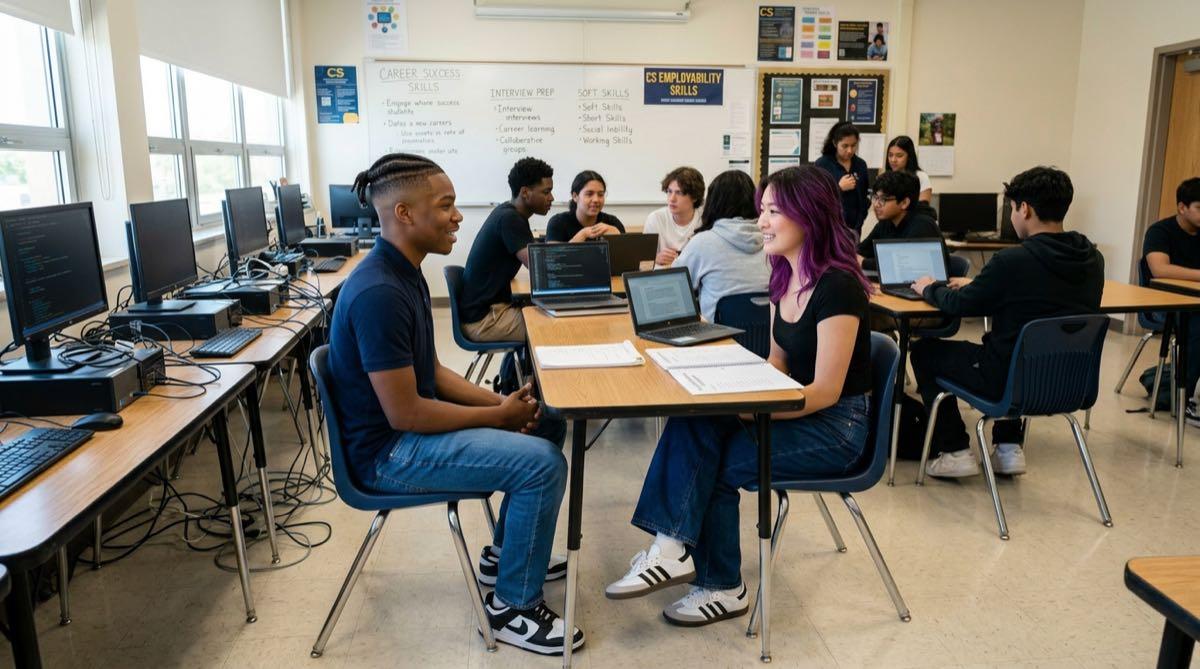
On the day of the interview, students will take turns playing “the boss” and “the candidate” in two structured 15-minute mock interviews. Students will exchange snapshots so that when they play the boss, they’ll have a chance to properly act out their role. I provide questions, but also encourage impromptu, related conversation. Active listening is key to the success of the interview, and I highly encourage follow-up questions to gain a greater understanding. It’s more fun when students really lean into their roles.
Reflection
Finally, there is a reflection where students determine whether they would have hired the candidate when they played the role of boss, and when they were the candidate, they decide whether they think they should have been hired.
Where this goes next
This lesson completes the core Career Readiness lessons. But in the next lesson, we will look at the importance of thank-you letters post-interview and cover letters for outreach to potential employers.