

At a Glance
Vision
This unit teaches employability skills the way a real job search works: each lesson produces something real that feeds directly into the next, so students leave with an honest body of work, not a stack of graded worksheets. It's built from both sides of the hiring process — real classroom teaching, plus a decade-plus in tech hiring and engineering management. Every standard students are held to here is one that was actually used or inspired by real resumes and run real interviews.
- Topics Covered
- Career & Industry ResearchResume Writing & Self-ReflectionInterview Skills & Professional CommunicationProfessional CorrespondenceDigital Portfolio & AI Literacy
- Subjects
- Computer ScienceCTAE (Career Technical and Agricultural Education)
- Related Courses
- Intro to Software TechComputer Science Principles
- Pacing
- Pacing: 3 weeks
Employability Skills Vocabulary
Employability skills were new to me when I first started teaching them in Computer Science. I had taught math for eight years, during which we dove straight into the subject at the start of the year. But fortunately, I have tons of personal career experience with employability skills. I built this unit from both sides of my career. I taught high school for years before I ever left the classroom, then spent twelve years in software development and engineering management — writing job descriptions, sitting on hiring panels, reading pre-screened resumes, running real interviews. Then I came back to teach computer science, and I brought all of that with me. This unit is what happens when “who’s going to actually read this resume” isn’t a hypothetical for the teacher writing the lesson.
The throughline
Employability skills usually get taught as a pile of disconnected worksheets: one day on resumes, one day on interviews, done. I wanted this unit to build as an actual job search does — each lesson producing something that feeds the next one, so that by the end, a student has an honest, real body of work, not just a stack of graded handouts. All of these lessons and corresponding teacher guides are available for sale!
Here’s the arc:
- Who Actually Works in Tech (available now) — Before students can market themselves for a role, they need to understand what the roles even are. This lesson breaks down real tech job titles and what people in them actually do day-to-day, so “I want to work in tech” becomes something more specific.
- Resume Writing Workshop, Parts 1–4 (available now) — A four-part series: self-inventory, goal-setting, quantifying your experience, and finally building the resume itself. Built to work as one continuous series or as standalone lessons, depending on how much time you have.
- Mock Interview Guide: Boss & Candidate Role-Play (available now) — Students play both sides of an interview, which does more to reduce interview anxiety than any lecture I ever gave on eye contact and handshakes.
- Cover & Thank-You Letters (available now) — Two letters that bookend a job search: reaching out about a role and following up after one — both fully student-authored, never AI-generated
- Portfolio Website Lesson (available now) — For CS students especially: a simple, real place to point people. Not just “make a website” — a lesson in what belongs on it and why.
Who this is for
This unit works for all CTE courses: Business, accounting, healthcare, IT, and, of course, computer science, which is my subject. There is one lesson on the roles of a Software Product team that dives specifically into Computer Science content. But now, Computer Science expertise is required for resume writing, mock interviews, cover letters, thank-you letters, and web-based portfolios. These lessons are perfectly suited for anyone teaching career education courses.
What makes this different from the employability worksheets you’ve probably already got
Every lesson in this unit was piloted with real students, not written in a vacuum. And because I’ve been on the other side of the hiring table, the standards students are held to here aren’t invented — they’re the same ones I used to screen actual resumes and run actual interviews.
Where to find each piece
Every lesson has its own post on this site that goes deeper into how I teach it, plus a ready-to-use classroom resource on Teachers Pay Teachers if you’d rather not build it from scratch.
More lessons in this unit are still being written — subscribe to get notified when they go up.
Lesson Plans in the Employability Skills Unit
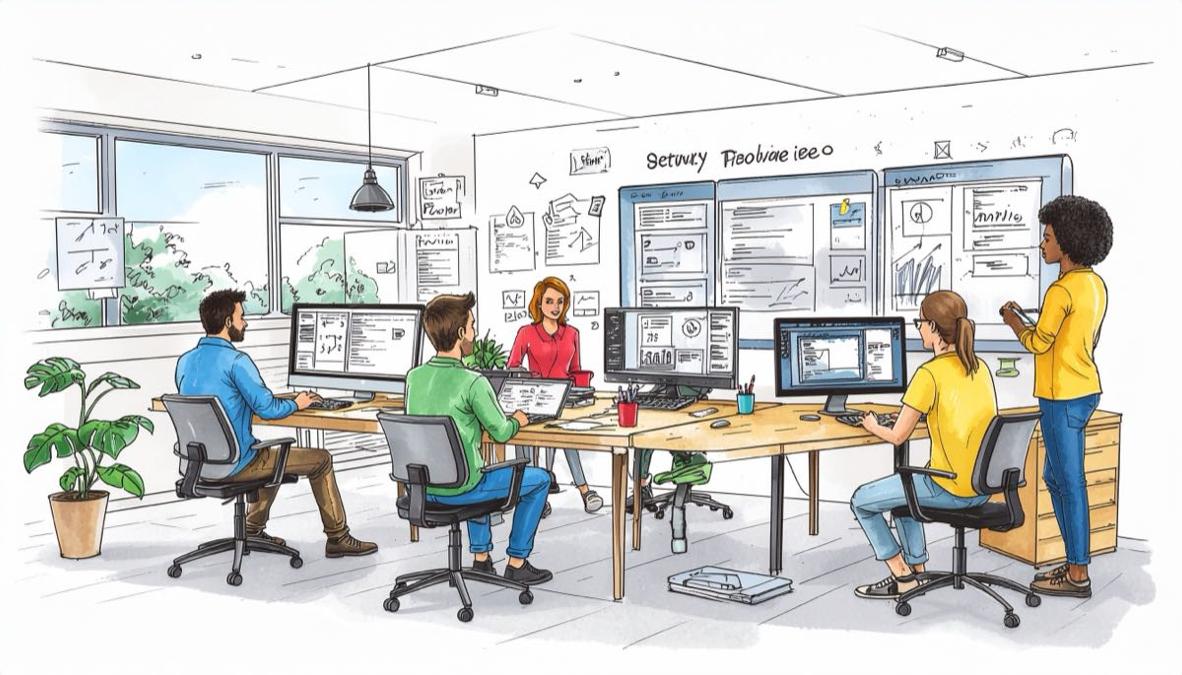
Who Actually Works in Tech
A high school lesson in which students research real tech job titles- Product Manager, UX/UI Designer, Full-Stack Engineer, QA Engineer- using verified, cited sources rather than guesses.

Resume Writing Workshop
A 4-part high school resume writing series — from raw brain dump to a graded first draft — built to be taught as a standalone unit or paired with a CS/career readiness class.

Mock Interview Guide
A high school mock interview lesson where every student plays both interviewer and candidate — paired role-play, real research, and a reflection grounded in what actually happened.

Cover Letter Thank You Letter
A high school lesson on writing a professional outreach (cover) letter and thank-you letter — student-authored, not AI-generated, addressed to a fictional practice contact.
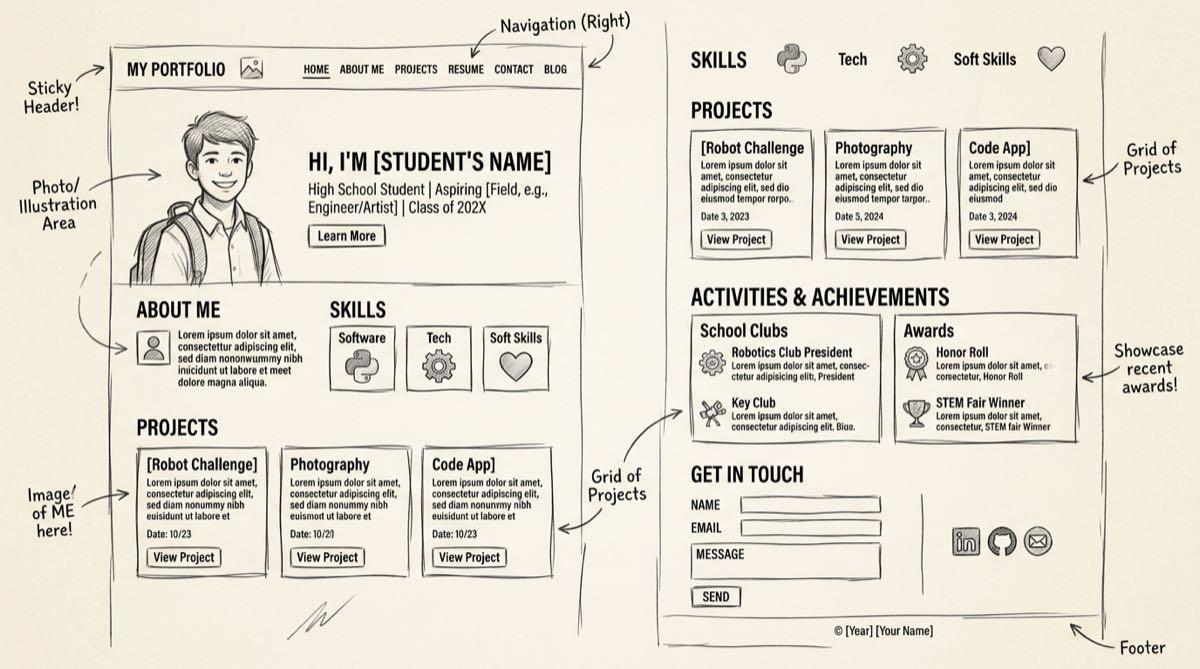
Personal Portfolio Website: From Resume to Homepage
A high school lesson that turns a finished resume into a real personal website — two full paths, no-code website builder or AI-guided HTML, student's choice. primary-keyword-idea: portfolio website lesson high school

Employability Skills Warm-Up Pack: 31 Bell-Ringers for Unit 1
A ready-to-use bank of 31 short bell-ringer prompts for an Employability Skills unit — reflection, recall, and real-world connection warm-ups, several field-tested in a real classroom.
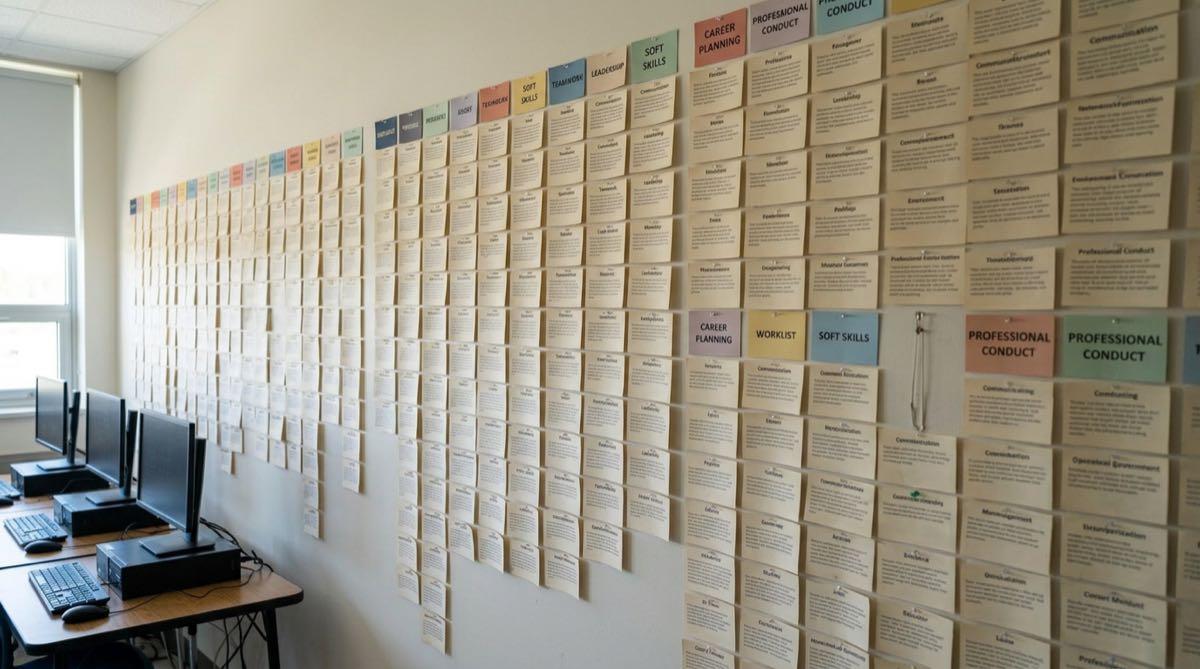
Employability Skills Word Wall: 39-Term Vocabulary Set for Unit 1
A 39-term vocabulary word wall for an Employability Skills unit, organized into 7 clusters with large-format display cards and a setup guide, refined from a real classroom's own vocabulary list.

Employability Skills Unit 1 Review Outline: 5-Section Note-Taking Organizer + Exemplar
A fill-in-the-blank note-taking outline covering all five Unit 1 Employability Skills resources, five sections and sixteen subsections, with a completed exemplar included.

Employability Skills Unit 1 Test Bank: 54-Question Assessment + Answer Key
A 54-question test bank covering all five Unit 1 Employability Skills resources, mixed multiple-choice and free response across four Depth of Knowledge levels, with a full teacher answer key and scoring guides.